
 Ayurveda & Panchakarma
Panchkarma Ayurvedic Hospital for Traditional Ayurvedic Care and Wellness
Panchkarma Ayurvedic Hospital for Traditional Ayurvedic Care and Wellness
A Panchkarma Ayurvedic Hospital provides traditional Ayurvedic healthcare approaches that may include Panchakarma therapies, lifestyle guidance, and individualised treatment recommendations. Rooted in the principles of Ayurveda, Panchakarma involves a range of traditional procedures selected according to a person's health needs and suitability for treatment. Understanding these approaches can help individuals explore their options for traditional healthcare and overall wellbeing.
Professional assessment is an important part of responsible Ayurvedic care. Before recommending any therapy, a qualified practitioner should review the patient's medical history, current symptoms, lifestyle, existing medications, and other relevant health factors. This helps determine whether a particular treatment is appropriate and whether further medical evaluation may be needed.
Personalised treatment planning also involves explaining available procedures, potential risks, limitations, preparation requirements, and follow-up care. Not every Panchakarma therapy is suitable for everyone, so recommendations should be based on individual assessment rather than a standard treatment plan.
When considering a Panchkarma Ayurvedic Hospital, look for recognised practitioner qualifications, applicable professional registration, appropriate hygiene standards, and clear communication about treatment options and costs. These factors can help you make informed decisions about traditional Ayurvedic care.
What Is a Panchkarma Ayurvedic Hospital?
A Panchkarma Ayurvedic Hospital is a healthcare facility that provides traditional Ayurvedic consultations and may offer Panchakarma therapies as part of an individualised care plan. Based on the patient's health concerns and assessment, practitioners may recommend suitable traditional procedures, dietary guidance, lifestyle adjustments, or other Ayurvedic approaches within their professional scope of practice.
Role of Ayurvedic Consultations and Therapies
An Ayurvedic consultation helps the practitioner understand the patient's symptoms, medical history, daily habits, and healthcare needs. Following the assessment, the practitioner can explain available treatment options and determine whether specific Panchakarma procedures are appropriate. The recommended approach should account for individual circumstances, potential risks, and any existing medical treatment.
Importance of Qualified Practitioners
Qualified practitioners play an important role in assessing treatment suitability, explaining procedures, and monitoring patients when necessary. Before choosing a hospital, check the practitioner's recognised qualifications and applicable professional registration. Patients should also receive clear information about treatment limitations, possible side effects, and when further medical evaluation may be required.
Facilities and Services
Facilities vary between Panchkarma Ayurvedic Hospitals. Depending on the individual establishment, services may include consultation rooms, designated therapy areas, or supervised treatment facilities. Confirm the availability of specific therapies, hygiene standards, appointment arrangements, and associated fees directly with the hospital rather than assuming that every facility offers the same services.
Choosing a suitable facility involves evaluating its professional standards, available services, and commitment to patient safety. A personalised assessment can help determine whether traditional Ayurvedic therapies are appropriate for your healthcare needs.
Understanding Panchkarma Ayurvedic Treatment
Panchkarma Ayurvedic treatment is a traditional approach within Ayurveda that involves a range of procedures intended to support health and wellbeing according to Ayurvedic principles. The term Panchakarma is commonly associated with five traditional therapeutic procedures, although the specific treatments and protocols used can vary depending on the practitioner and the patient's needs.
Traditional Principles of Panchkarma
Panchakarma follows traditional Ayurvedic concepts that emphasise individual assessment and selecting therapies according to a person's health condition and constitution. Depending on the assessment, a qualified practitioner may consider procedures such as Abhyanga (therapeutic oil massage), Swedana (traditional heat or sweating therapy), or other Panchakarma procedures where appropriate. These therapies are not interchangeable, and their suitability depends on individual circumstances.
Importance of Preparation and Practitioner Guidance
Before beginning treatment, the practitioner should review your medical history, current symptoms, existing medications, and relevant health conditions. They should explain the proposed procedures, preparation requirements, potential risks, and any circumstances in which treatment may not be advisable.
Panchakarma should be conducted under appropriate professional supervision rather than attempted independently.
Aftercare and Individual Suitability
Aftercare recommendations may include guidance on meals, daily activities, hydration, rest, and follow-up appointments, depending on the procedure performed. Some therapies may not be suitable for people with particular medical conditions, and certain procedures can cause adverse effects. Inform your healthcare professionals about all treatments you receive, and do not delay necessary medical care.
Panchkarma Ayurvedic treatment should be tailored to individual needs. A professional assessment helps determine whether a particular procedure is appropriate and supports informed decisions about its potential benefits, limitations, and risks.
Common Panchkarma Therapies and Procedures
Panchkarma Ayurvedic treatment may involve different traditional procedures selected according to an individual's health needs and the practitioner's assessment. The therapies available vary between facilities, so it is important to confirm which procedures are genuinely offered by the hospital and whether they are appropriate for your circumstances.
Abhyanga
Traditional Oil Massage
Swedana
Traditional Heat Therapy
Shirodhara
Traditional Oil Application
Basti
Traditional Ayurvedic Procedure
Vamana & Virechana
Traditional Procedures
Abhyanga – Traditional Oil Massage
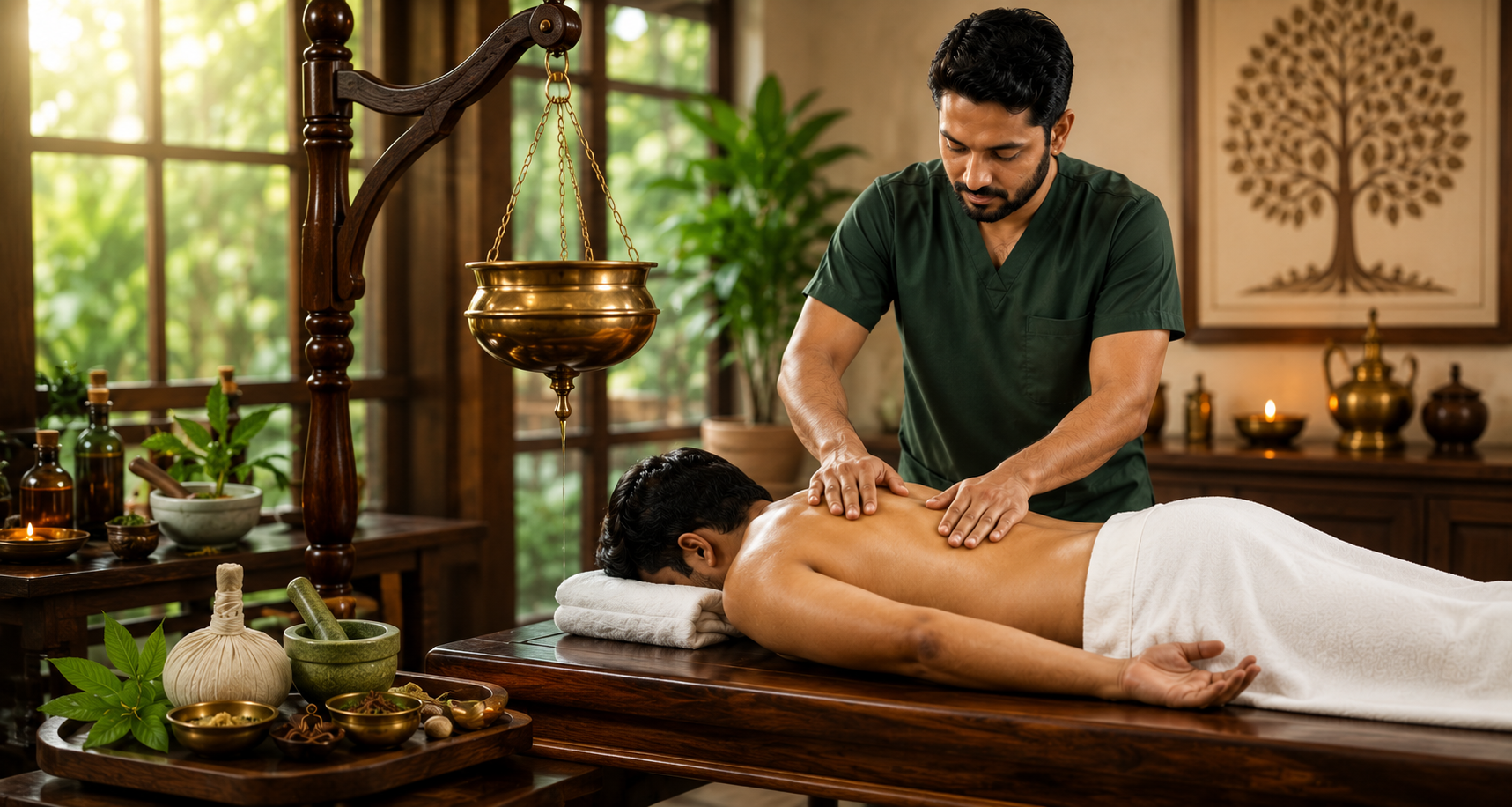
Abhyanga involves applying oil to the body using specific massage techniques described in Ayurveda. It is traditionally used as part of Ayurvedic wellness routines and may promote relaxation. The type of oil and technique should be selected with consideration for individual needs and potential sensitivities.
Swedana – Traditional Heat Therapy
Swedana refers to traditional procedures involving heat or sweating, sometimes used alongside other Ayurvedic treatments. The method and duration depend on the practitioner's recommendations. Heat-based procedures may not be suitable for everyone, particularly people with certain medical conditions or heat sensitivity.
Shirodhara – Traditional Oil Application
Shirodhara is an Ayurvedic procedure in which a steady stream of liquid, often oil, is gently poured over the forehead under controlled conditions. It is traditionally associated with relaxation and is offered by some Ayurvedic facilities. Patients should ask about the procedure and its suitability before proceeding.
Basti – Traditional Ayurvedic Procedure
Basti is a traditional Ayurvedic procedure involving the administration of a prepared substance through the rectum. It requires professional assessment and appropriate supervision because it may carry risks and is not suitable for every individual.
Vamana and Virechana – Traditional Procedures
Vamana and Virechana are traditional procedures associated with therapeutic emesis and purgation, respectively. They require careful assessment and qualified supervision due to potential risks such as dehydration and other complications.
Vamana and Virechana should never be attempted independently.
Choosing Suitable Panchkarma Therapies
Not every Panchkarma procedure is appropriate for every patient, and facilities may offer only selected treatments. A qualified practitioner should explain the intended purpose, potential risks, limitations, preparation, and aftercare before recommending a procedure.
Although these therapies have established roles within traditional Ayurvedic practice, claims that they cure diseases or guarantee detoxification are not supported by sufficient scientific evidence. Discuss your healthcare needs with a qualified professional before deciding whether a particular treatment is suitable.
Why Choose a Qualified Panchkarma Ayurvedic Hospital?
Choosing a qualified Panchkarma Ayurvedic Hospital is an important step when considering traditional Ayurvedic therapies. A suitable facility should emphasise professional qualifications, individual assessment, appropriate hygiene, and transparent communication. These factors help patients understand available treatment options and make informed decisions about their healthcare.
-
Verified Practitioner Qualifications and Registration
Check whether the Ayurvedic practitioners hold recognised qualifications and applicable professional registration. You can verify their credentials through the relevant official authority and enquire about experience relevant to your healthcare concerns.
-
Appropriate Facilities and Hygiene Standards
Panchkarma procedures should be performed in suitable facilities with appropriate hygiene practices and professional supervision. Before booking, confirm which therapies are available and ask about the treatment environment, safety precautions, and any preparation requirements.
-
Individual Consultations and Transparent Treatment Plans
A qualified practitioner should review your medical history, current symptoms, lifestyle, and existing medications before recommending treatment. The proposed plan should be tailored to your circumstances, with clear explanations of the procedures, their intended purpose, and available alternatives.
-
Clear Communication About Risks, Costs, and Follow-Up Care
Before starting treatment, ask about possible side effects, treatment limitations, consultation fees, therapy charges, and aftercare. A responsible practitioner should answer your questions clearly and recommend further medical evaluation when necessary.
Choosing a Panchkarma facility that prioritises professional standards and patient safety can help you understand your care options and decide whether traditional Ayurvedic therapies are appropriate for your needs.
Who Should Seek Medical Advice Before Panchkarma Treatment?
Panchkarma Ayurvedic treatment involves traditional procedures that may not be suitable for everyone. Whether a particular therapy is appropriate depends on your health history, current symptoms, existing medical conditions, and the specific procedure being considered. Before starting treatment at a Panchkarma Ayurvedic Hospital, consult a qualified practitioner to discuss your individual needs and potential risks.
People with Existing Health Conditions
Individuals with chronic illnesses, heart conditions, kidney or liver problems, digestive disorders, or other significant medical concerns should seek appropriate professional advice before undergoing Panchkarma procedures. Treatments involving heat, fasting, purgation, or other intensive interventions may require additional precautions or may be unsuitable in certain circumstances.
Importance of Disclosing Medical Conditions and Medications
Inform your Ayurvedic practitioner about all existing health conditions, allergies, prescription medicines, over-the-counter medicines, and herbal supplements you use. This information helps the practitioner assess potential risks and interactions.
Do not stop prescribed medication or change its dosage without advice from the prescribing healthcare professional.
When Further Medical Evaluation Is Needed
People who are pregnant or breastfeeding, older adults with significant health concerns, and individuals recovering from illness or surgery should obtain appropriate medical guidance before considering specific procedures. Additional precautions may also be necessary for children and people with reduced physical strength or dehydration risks.
If you have unexplained, persistent, or worsening symptoms, seek appropriate medical evaluation rather than relying solely on traditional therapies. A responsible practitioner should explain treatment limitations and refer you for further assessment when needed.
An individual assessment is essential before Panchkarma treatment. Discuss the expected procedures, possible side effects, and available alternatives with qualified healthcare professionals so you can make an informed decision about your care.
Frequently Asked Questions
1. What is a Panchkarma Ayurvedic Hospital?
A Panchkarma Ayurvedic Hospital provides traditional Ayurvedic therapies designed to support the body's natural cleansing processes, improve overall well-being, and promote balance. Treatments are recommended based on an individual's health condition and assessment by a qualified Ayurvedic practitioner.
2. What treatments are offered through Panchkarma?
Panchkarma treatments may include Vamana, Virechana, Basti, Nasya, and Raktamokshana, along with supportive therapies such as Abhyanga (Ayurvedic oil massage) and Swedana (therapeutic sweating). The appropriate therapies depend on individual needs and professional assessment.
3. How long does Panchkarma treatment take?
The duration of Panchkarma treatment varies depending on the therapies recommended, the individual's health condition, and the treatment plan. Some therapies may take a few days, while a comprehensive program may require several weeks under professional supervision.
4. How do I choose a qualified Ayurvedic practitioner?
Choose a registered Ayurvedic practitioner with recognized qualifications, relevant clinical experience, and a good understanding of your health needs. Ensure the hospital follows appropriate hygiene and safety practices and provides a personalized treatment plan after consultation.
5. How can I book a consultation at a Panchkarma Ayurvedic Hospital?
You can book a consultation by contacting the hospital by phone, visiting its official website, or using its online appointment booking facility, if available. During your consultation, discuss your symptoms, medical history, and treatment goals to determine the most suitable approach.
Book Your Consultation at Our Panchkarma Ayurvedic Hospital
Discover personalized Ayurvedic care at our Panchkarma Ayurvedic Hospital, where treatment recommendations are based on your health concerns and individual needs. Consult a qualified Ayurvedic practitioner to understand suitable Panchkarma therapies, available treatment options, and the expected duration of care.
During your consultation, discuss your symptoms, medical history, and wellness goals to help determine an appropriate treatment plan. You can also enquire about available facilities, treatment procedures, consultation charges, and package fees before beginning your treatment.
Our team can guide you through the consultation process and help you understand the next steps for your Ayurvedic care.
Book Your Consultation Today to enquire about Panchkarma treatments, consultation availability, and fees.