
 Ayurveda & Panchakarma
Ayurveda Panchakarma Centre | Your Guide to Authentic Ayurvedic Wellness
Ayurveda Panchakarma Centre for Holistic Ayurvedic Wellness
An Ayurveda Panchakarma Centre offers traditional Ayurvedic therapies focused on supporting overall wellness through personalized care. Panchakarma is an ancient Ayurvedic approach involving specific treatments selected according to individual health needs and body constitution.
At a Panchakarma Ayurvedic Clinic, a qualified practitioner assesses your health and recommends suitable therapies, which may include therapeutic massages, herbal applications, and other traditional procedures.
Choosing the right centre involves checking practitioner qualifications, hygiene standards, treatment methods, and consultation services. Understanding these factors can help you make an informed decision about your Ayurvedic wellness journey.
What Is an Ayurveda Panchakarma Centre?
An Ayurveda Panchakarma Centre is a specialized wellness facility that provides Ayurvedic consultations and traditional Panchakarma therapies under the guidance of qualified practitioners. These centres follow Ayurvedic principles to develop personalized treatment plans based on individual health needs, lifestyle, and wellness goals.
Before recommending any therapy, an Ayurvedic practitioner reviews the person's health history, current concerns, dietary habits, daily routine, and previous treatments. This assessment helps determine whether Panchakarma is suitable and which procedures may be appropriate.
Depending on the consultation, the treatment plan may include preparatory therapies, therapeutic oil massages, herbal applications, and other traditional Ayurvedic procedures. The practitioner also explains the recommended approach, expected duration, preparation requirements, and necessary precautions.
A well-managed centre maintains appropriate hygiene, uses suitable treatment protocols, and monitors the individual's response throughout the process. People considering Panchakarma should discuss existing medical conditions and medications with their healthcare providers, as some procedures may not be appropriate for everyone. Choosing a qualified centre helps ensure that treatments are recommended responsibly and tailored to individual circumstances.
Understanding Ayurvedic Panchakarma Treatment
Ayurvedic Panchakarma Treatment is a traditional approach within Ayurveda that involves specific therapeutic procedures intended to support well-being. In Ayurvedic philosophy, Panchakarma is associated with balancing the body's doshas and addressing individual health concerns through carefully selected therapies.
Panchakarma is not a single treatment that suits everyone. The procedures recommended depend on factors such as a person's health history, age, current symptoms, physical condition, and overall suitability. A qualified Ayurvedic practitioner evaluates these factors before suggesting a personalized treatment plan.
The Importance of Preparation and Practitioner Guidance
Depending on the recommended procedure, preparation may involve dietary guidance, external oil applications, therapeutic massages, or other preparatory practices. Some Panchakarma procedures are intensive and may carry risks, making professional assessment and supervision essential.
The practitioner should explain the purpose of each therapy, possible side effects, preparation requirements, and any precautions before treatment begins. Individuals should also disclose existing medical conditions and medications to help determine whether a particular procedure is appropriate.
Personalized Treatment and Recovery
Treatment duration, the therapies used, and recovery recommendations can vary from person to person. Some individuals may receive supportive Ayurvedic therapies without undergoing the full Panchakarma process.
Please note: Panchakarma should not be considered essential for everyone or a guaranteed cure for diseases. A responsible approach focuses on informed decisions, qualified guidance, and appropriate medical care when needed.
Common Therapies Available at a Panchakarma Therapy Centre
A Panchakarma Therapy Centre may offer various traditional Ayurvedic procedures depending on practitioner expertise, available facilities, and individual suitability. Each therapy serves a different purpose within Ayurvedic practice, and recommendations should be based on a proper consultation rather than a standard treatment package.
Abhyanga
Traditional Ayurvedic Oil Massage
Shirodhara
Traditional Oil Therapy
Other Procedures
Swedana, Basti & selected cleansing procedures
Abhyanga – Traditional Ayurvedic Oil Massage
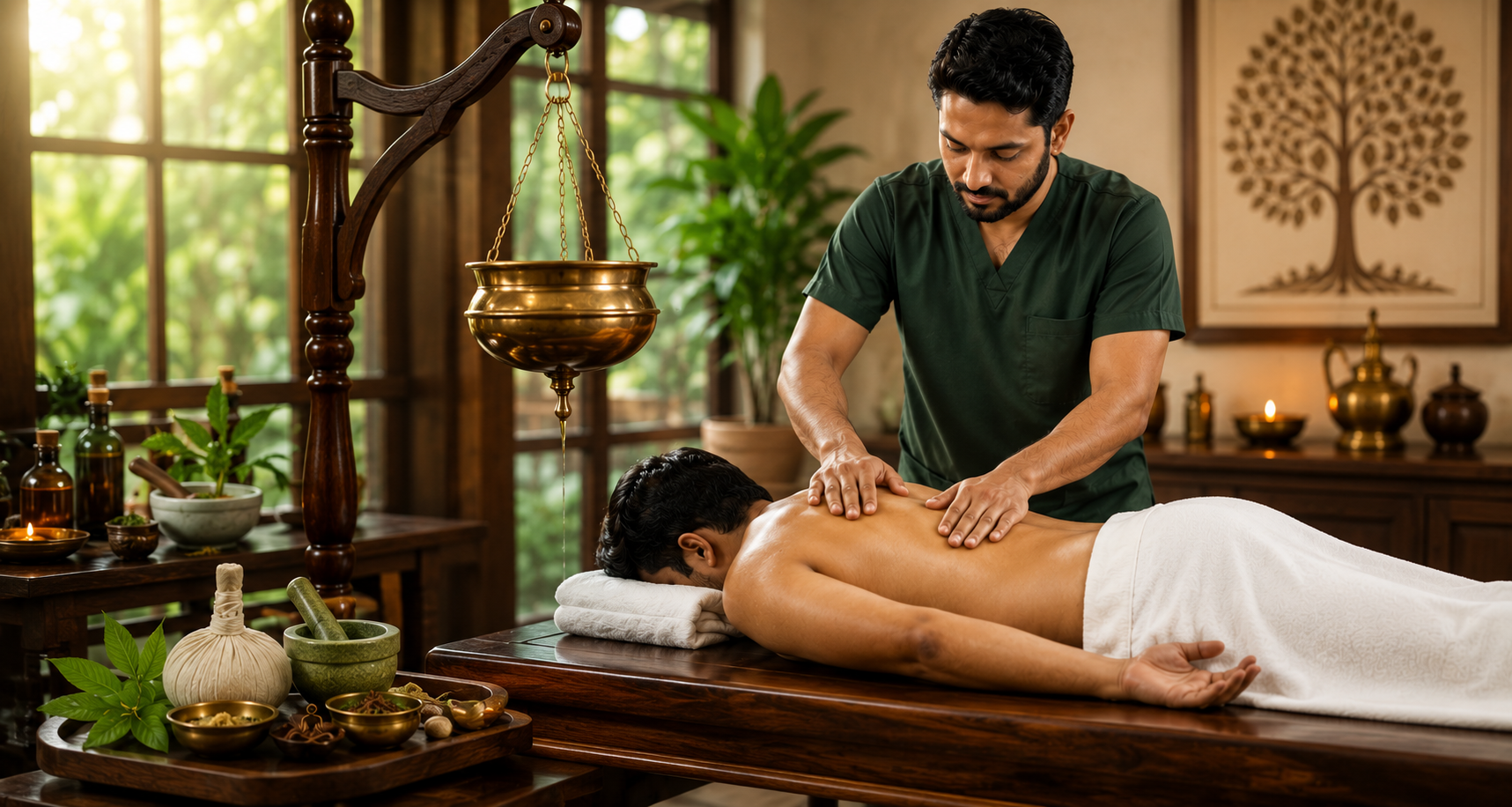
Abhyanga involves applying oil to the body using specific massage techniques. Traditionally, it is used to promote relaxation and support general well-being. The choice of oil and massage technique depends on individual needs and practitioner guidance.
Shirodhara – Traditional Oil Therapy
Shirodhara involves the controlled pouring of a liquid, commonly warm oil, over the forehead. It is traditionally associated with relaxation and calming Ayurvedic practices. Professional assessment is important to determine whether this procedure is appropriate.
Other Traditional Panchakarma Procedures
Depending on the centre's facilities and clinical assessment, other procedures may include Swedana (therapeutic sweating), Basti (medicated enema), and selected cleansing procedures prescribed within Ayurvedic practice. These treatments differ in their methods, preparation requirements, and potential risks.
Not every therapy is suitable for every individual. A qualified Ayurvedic practitioner should review health history, existing conditions, and medications before recommending a procedure. Choosing an established centre with appropriate hygiene, trained personnel, and clear treatment guidance helps support a more informed wellness experience.
How to Choose the Right Panchakarma Ayurvedic Clinic
Choosing the right Panchakarma Ayurvedic Clinic is an important step towards a safe and well-informed wellness experience. Before starting treatment, consider the following factors to evaluate the centre's quality of care and professional standards.
-
Check Practitioner Qualifications
Choose a clinic with qualified, appropriately registered Ayurvedic practitioners who have relevant experience in Panchakarma therapies. They should explain treatment options and assess your individual needs before making recommendations.
-
Ensure Proper Consultation
A reliable clinic reviews your health history, current concerns, medications, and suitability before suggesting any procedure. Avoid centres that recommend intensive treatments without an appropriate assessment.
-
Evaluate Hygiene and Facilities
Treatment rooms, equipment, linens, and reusable materials should be maintained according to appropriate hygiene standards. Staff should follow suitable cleaning and infection-control practices.
-
Understand Treatment Costs and Risks
Ask for a clear explanation of the recommended procedures, fees, expected duration, preparation requirements, possible side effects, and any necessary precautions. Treatment benefits should never be guaranteed.
-
Look for Follow-Up Support
A professional centre provides clear aftercare guidance and explains when follow-up consultations may be needed. Transparent communication helps you make informed decisions and understand each stage of your treatment plan.
Why Consulting the Best Ayurvedic Doctor Matters
Choosing the Best Ayurvedic Doctor means looking beyond promotional claims and focusing on qualifications, relevant experience, professional registration, and a responsible approach to patient care. A qualified practitioner can assess your individual health needs and explain whether Ayurvedic therapies are appropriate for your circumstances.
Before recommending Panchakarma, the doctor should review your health history, current symptoms, existing medical conditions, and medications. This assessment helps identify potential risks and determine which procedures, if any, may be suitable.
A personalized treatment plan should clearly outline the recommended therapies, preparation requirements, expected duration, possible side effects, and follow-up arrangements. The practitioner should also answer your questions and explain the limitations of the proposed treatment.
If you have an existing medical condition or take prescribed medication, consult your healthcare provider before beginning treatment. A responsible Ayurvedic doctor prioritizes informed decisions, patient safety, and appropriate medical care rather than promising guaranteed results.
What to Expect at an Ayurvedic Treatment Centre
Visiting an Ayurvedic Treatment Centre typically begins with a consultation to understand your health concerns, wellness goals, and expectations. The exact process may vary depending on the centre's services and the therapies recommended by the practitioner.
-
Initial Consultation
The practitioner discusses your health history, lifestyle, dietary habits, and current concerns.
-
Health and Suitability Assessment
Your existing medical conditions, medications, and other relevant factors are reviewed to determine whether the proposed therapies are appropriate.
-
Treatment Recommendations
The practitioner explains suitable Ayurvedic procedures, their traditional purpose, possible risks, and expected duration.
-
Scheduling and Preparation
If treatment is appropriate, you receive information about appointment timings, preparation requirements, fees, and any necessary precautions.
-
Follow-Up and Aftercare
Depending on the procedure, the centre may provide dietary guidance, recovery recommendations, and follow-up consultations to review your experience.
Before starting, ask questions about the treatment plan and discuss any concerns with your practitioner. Clear communication helps you make informed decisions about your Ayurvedic wellness journey.
Who Should Seek Professional Advice Before Panchakarma?
Panchakarma suitability depends on an individual's health, medical history, and the specific procedures being considered. Although these therapies are rooted in traditional Ayurvedic practice, they may not be appropriate for everyone.
People who are pregnant, have significant health conditions, take regular medication, or are recovering from an illness should seek advice from a qualified healthcare professional before considering Panchakarma. Certain procedures may involve dietary restrictions, intensive cleansing, or other practices that require additional precautions.
A qualified Ayurvedic practitioner should assess individual circumstances and explain potential risks before recommending treatment. Inform the practitioner about existing conditions, allergies, and all medications or supplements you take.
It is also important to remember that traditional Ayurvedic therapies should not replace necessary medical treatment, prescribed medications, or evidence-based care. Seeking appropriate medical advice helps you make informed decisions about your health and wellness.
Book Your Consultation at Our Ayurveda Panchakarma Centre
Begin your Ayurvedic wellness journey with a consultation at our Ayurveda Panchakarma Centre. Discuss your wellness goals with a qualified practitioner and learn about the traditional therapies available, their suitability, and the precautions to consider before starting treatment.
During your consultation, ask about the recommended treatment plan, expected duration, preparation requirements, and pricing. This will help you understand your options and make an informed decision based on your individual needs.
Book Your Consultation Today to explore suitable Ayurvedic wellness options and take the next step towards personalized care.
Frequently Asked Questions
1. What Is an Ayurveda Panchakarma Centre?
An Ayurveda Panchakarma Centre provides Ayurvedic consultations and traditional therapies selected according to individual health needs and suitability.
2. What Happens During Ayurvedic Panchakarma Treatment?
Ayurvedic Panchakarma Treatment begins with a practitioner consultation and health assessment. Suitable therapies, preparation requirements, and aftercare guidance are discussed before treatment starts.
3. How Do I Choose a Panchakarma Ayurvedic Clinic?
Choose a clinic with qualified, appropriately registered practitioners, hygienic facilities, personalized assessments, transparent pricing, and clear explanations of treatment risks and procedures.
4. How Long Does Panchakarma Treatment Take?
The duration varies according to the procedures recommended, individual health circumstances, and practitioner assessment. Ask your Ayurvedic doctor about the expected schedule before beginning treatment.
5. How Can I Book a Consultation with an Ayurvedic Doctor?
Contact your chosen Ayurvedic treatment centre through its official appointment page or contact channels. Discuss your wellness goals, available therapies, consultation fees, and treatment suitability before scheduling your visit.